Slow Roasted Duck with Vignerons de Buxy Buissonnier Mercurey 2016 Review

We have been on a bit of a roast duck kick lately discovering an increase of fresh duck in grocery stores with prices comparable to chicken. I have always loved duck and gravitate to it when I find it on a menu. Recent attempts to roast it have resulted in spongy skin with tough, sinewy chewy meat. Resorting to Google, I found a recipe that suggests cooking in low and slow and then jacking up the temperature at the end to crisp the skin. Since the recipe is relatively simple and we didn’t follow it for the accompanying sauce, I won’t include it. We cut off excess fat and removed the neck and giblets. After trussing the wings and legs, gently score the skin to allow fat to drain out and the skin to crisp and seasoned with a bit of salt and pepper.

We preheated the oven to 325 Fahrenheit (163 Celsius) and placed the duck in a roasting pan for two hours. Next, we seasoned chunks of chopped potatoes with salt, pepper and paprika and placed in a tray brushed with duck fat. After hours, we removed the duck and brushed some of the juices from the bottom of the pan over the duck legs and breast. Placing both the potatoes and duck back into the oven for another hour.

After the timer went off, we turned the heat up to 425 Fahrenheit (220 Celsius) for fifteen minutes to crisp up the skin.
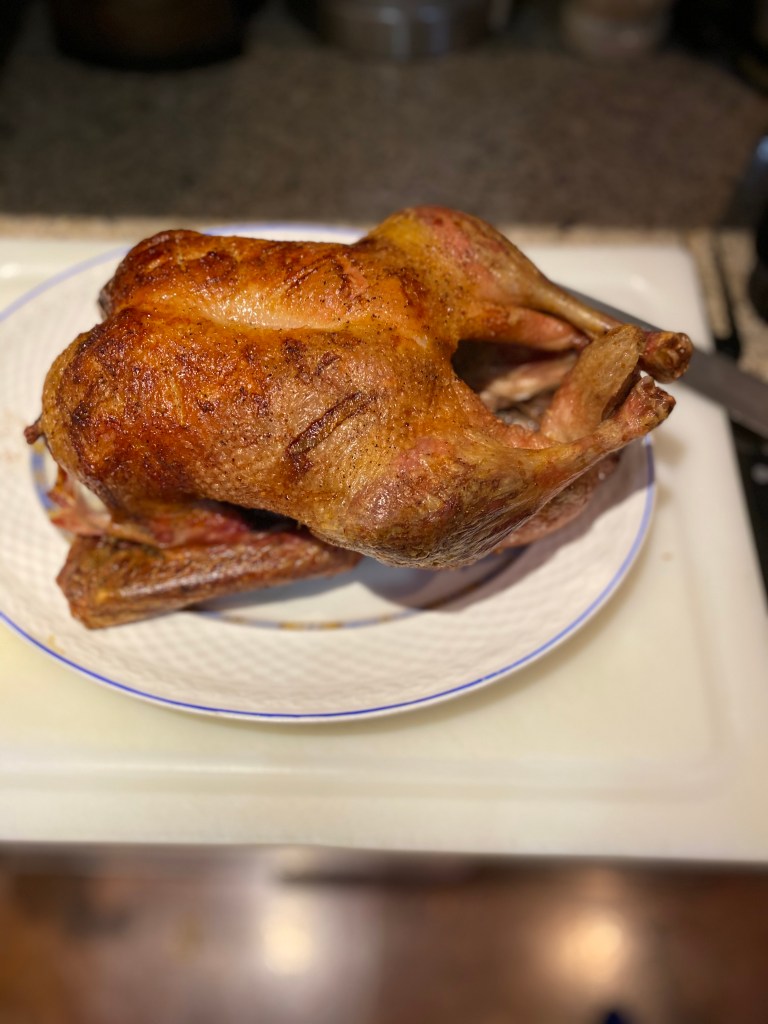
Once the Duck was removed, I tented it with foil and let it stand for fifteen minutes.
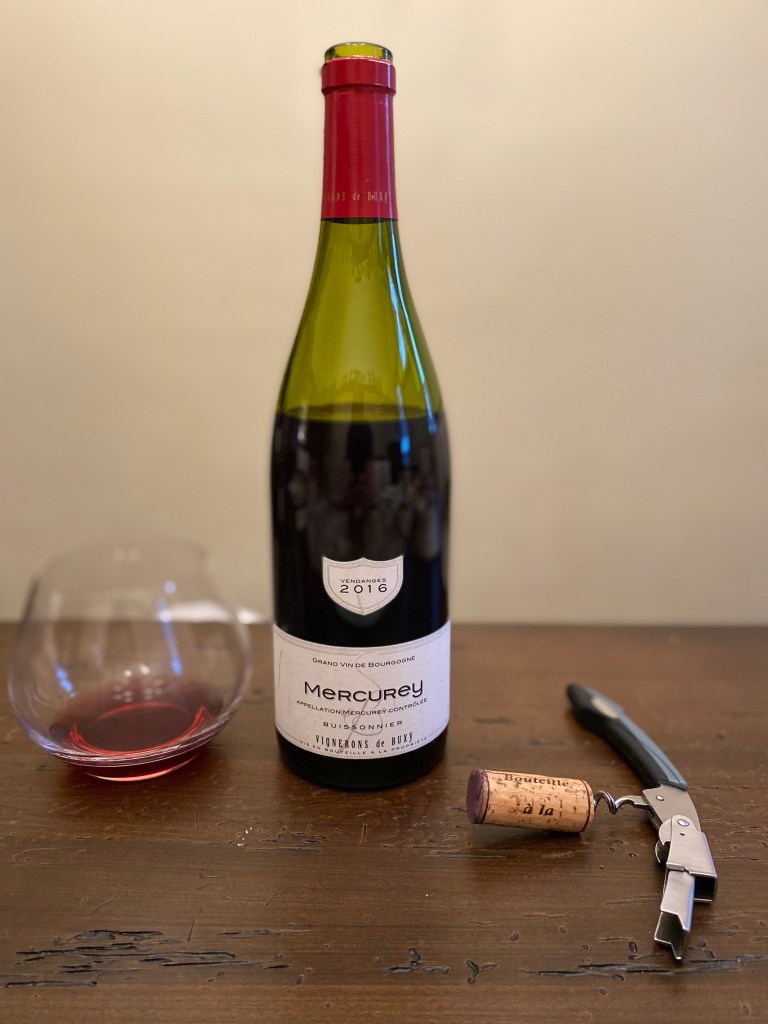
Duck often has a citrus flavour and is rich with fatty, dark meat. I usually always have Pinot Noir with it. The obvious choices for me were Pinot from Sonoma, Oregon, New Zealand or Burgundy. I would also consider a Gamay or lighter style Syrah.

I had picked this Burgundian wine up last year and thought it would be the perfect match for my slow-roasted duck.
It was a light ruby in colour showing a youthful rim. It had aromatics of red cherry, strawberry, cloves, cola, coffee, tobacco, and a bit of wet forest leaf. I found it had tastes of strawberry, raspberry and cherries. The structure was dry displaying soft tannins and medium-plus acidity. It had a smooth medium-long finish. As I had hoped, this wine was an ideal choice for the main course.

Click here to check stock at the LCBO

Why did I like it? This wine was a perfect pairing for my roast duck dinner. The meal was rich and the high acidity cut through the fat of the meat and the soft tannins didn’t overpower it. The wine displayed fresh red fruits combined with elements of earthy flavours. This was no basic Bourgogne and was a good value purchase.
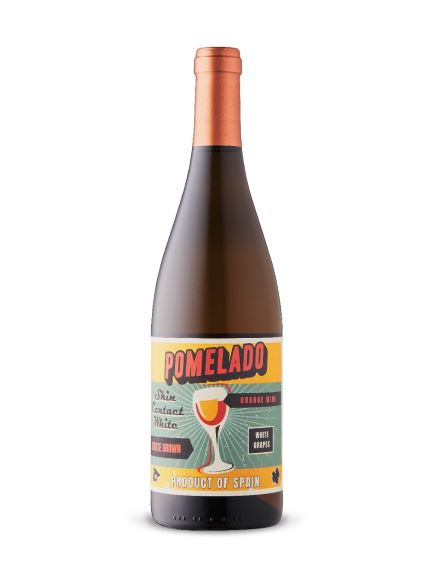
Pomelado Wine Review

A colleague of mine mentioned to me that she had just purchased a couple of natural organic wines from the LCBO which she had seen on an Instagram link that she follows (the living vine) so I thought I would try one.

This wine was orange in colour due to short skin contact. It had a nose of binned apple, mandarin orange, guava and papaya aromas. On the palate, I tasted guava, orange rind and tinned apple juice flavours. I found the alcohol level to be medium, with restrained acidity and a short finish. The aromatics are not quite what I would expect from this grape since Sauvignon Blanc typically has strong notes of cut grass (pyrazines) and contains high acidity. The skin contact changes the aromatics and limits the acidity a bit. The wine comes from an estate in La Mancha, Spain which specializes in organic and biodynamic wines.

Why did I like it?

This was my first experience with natural wines. I did enjoy my first Orange natural wine. I like the fact it is organic and it offered an interesting twist to Sauvignon Blanc that I found intriguing. I would buy or recommend this wine to others.

What I would pair it with?

This wine would go well with Paella, and seafood. I had it with fried chicken.

To check stock click here.

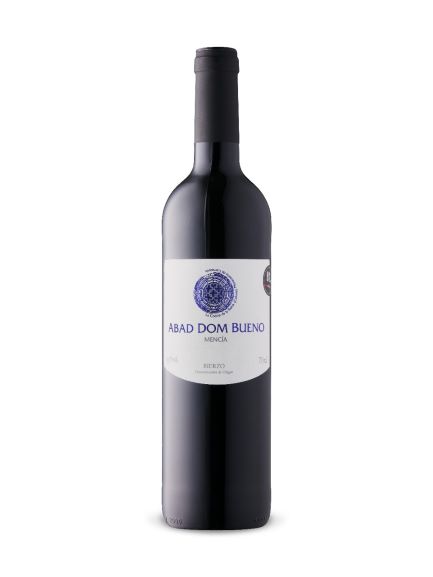
Abad Dom Bueno Mencia Wine Review

While walking through an LCBO late one afternoon, I decided to pick up this Mencia from Brieza DO. I am not too familiar with this grape and thought I would give it a try.

Visually, the wine is medium ruby with slight rim variation but still very youthful. It displays a few slow-moving tears for viscosity. On the nose, cherries dominate with some currants, cherry cough syrup, wet leaves and cola. On the palate, it is dry, with medium-plus alcohol, grippy medium-plus tannins, medium-plus acidity and medium-plus body. It has a medium-plus finish. Red fruits (cherry, currants, pomegranate) are forefront.

Why I liked it.
It had a nice balance between the acidity, tannins, alcohol and body. The wine displayed a robust style yet was not overpowering with oak and fruit.

What I pared it with.

I had the Mencia with boeuf bourguignon.

What I didn’t like about it.

I did enjoy the wine and would purchase it again though I felt the wine was too rustic for the boeuf bourguignon. It would have been better with pepper steak or spicy sausage or perhaps even turkey.

Introduction

Just to introduce myself, I am a passionate wine enthusiast and am often asked by colleagues what wine to buy or what I am drinking so I decided to start this site.

I love wine. I love how it looks in the glass. How it reflects light, expresses rim variation, displays colour and viscosity. I love how it proclaims different aromatics, notes, bouquets and fragrances. Most of all, I love how it tastes.

I also love food. I love the colours, the different aromas, the different textures and tastes. Most of all, I love to pair wine with food. I enjoy pairing different flavour profiles with the appropriate wine style.

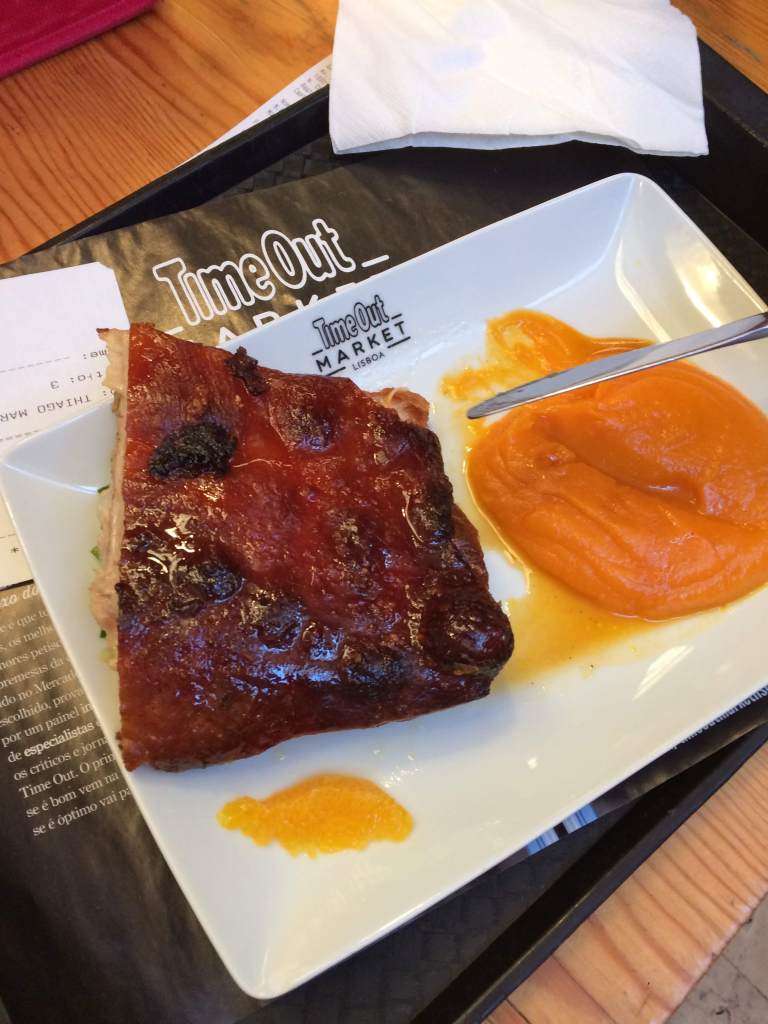
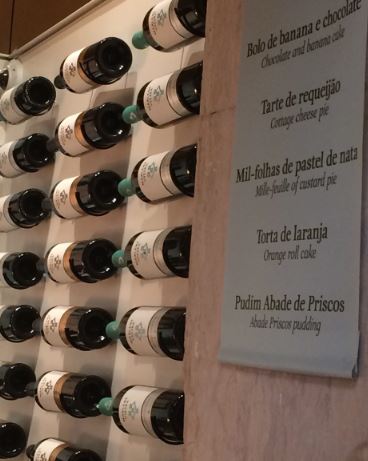
The pictures below were taken at Time Out Market in Lisbon, Portugal. This has to be the ultimate food court I have ever been in. A variety of different foods from various great chefs with and awesome wines by the glass or bottle. My kind of place. I will refer to my Portugal experience on a later blog.

This image has an empty alt attribute; its file name is por-time.jpg

Tastes of Australia 2020

I recently attended a Taste of Australia. Many areas and styles from down under were represented. I asked about the recent fires and how the wine industry was coping. Most felt that fires were common during summers and downplayed their effects. Hopefully, they are correct and we won’t see a downturn with the Aussie wine industry. I would be more concerned with the rise of the dreaded funnel spiders which I read were becoming a problem. One vendor told me spiders were not a concern but if ever I visited Australia to “watch out for the sharks.”

White Wines

On to the wines. I started with the whites searching for a good Sauvignon Blanc (or a Semillon Sauvignon). but this seemed a challenge. Most of the Sauvignon Blancs lacked acidity and the cut grass note most Sauvignon Blancs are famous for so I moved on to Chardonnay. Most of the Chards had a distinctive matchstick flint reductive odour which was not unpleasant and added to the popcorn/caramel oaky notes balanced with yellow fruits and a decent acidity. One notable Pinto Grigio was tasted. It had a copper-like tinge to the colour and had notes of stone fruit and peach, pear, apple on the palate with good acidity. I was starting to get into a groove and then spied a booth from Margret River.

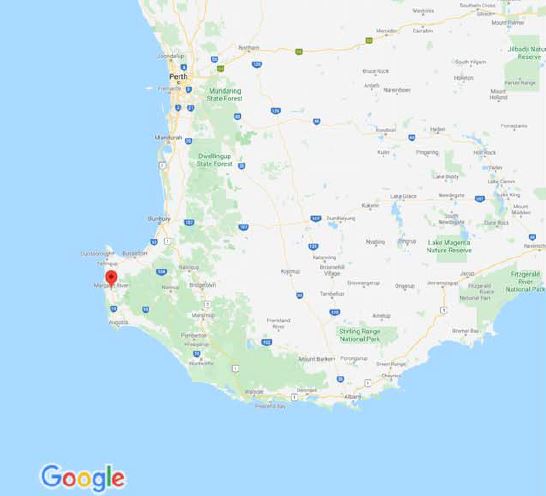
Courtesy of Google Maps

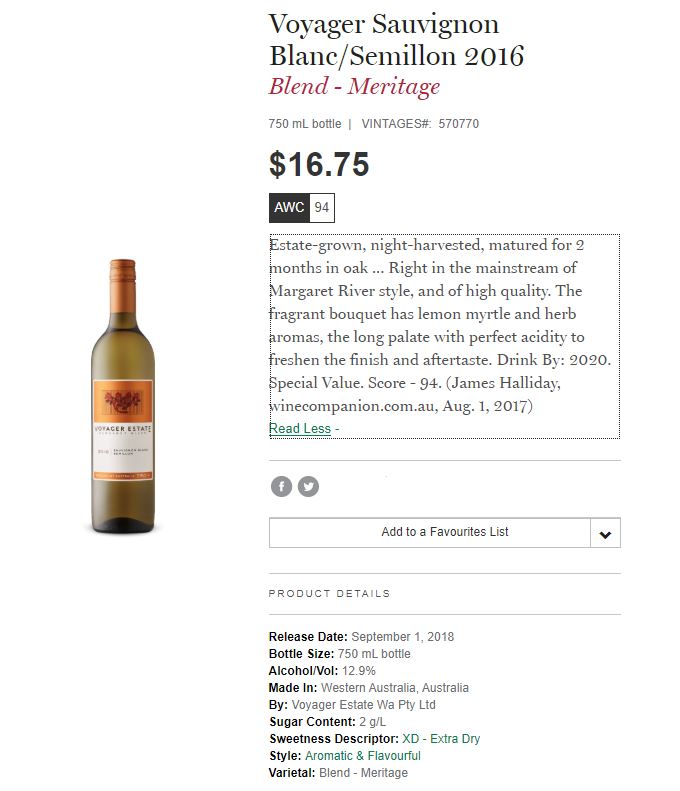
For those unfamiliar with Margret River, it is on the southwest side of Australia near the City of Perth. The vineyards get cooling effects from the confluence of the Indian Ocean and the great Southern Ocean. Most wines are made in a Bordeaux style. This is a must-visit area for myself though I am terrified of spiders. I figure you can escape the spiders by going into the ocean but that leaves yourself exposed to the sharks. Anyway, I digress. The first wine I tried was a 2018 Sauvignon Blanc Semillon blend. The wine had typical notes expected of ammonia, cut grass and passion fruits with the acidity of medium-plus and tropical fruits on the palate.

Check Stock

Courtesy of LCBO.COM

Red Wines

Transitioning from the whites, I move on to the reds, I started with a few Pinot Noirs from Victoria. This area has been devastated by the recent fires and hopefully, any Wineries destroyed will be able to recover and my heart goes out to anyone who has lost family, friends, livestock and property.

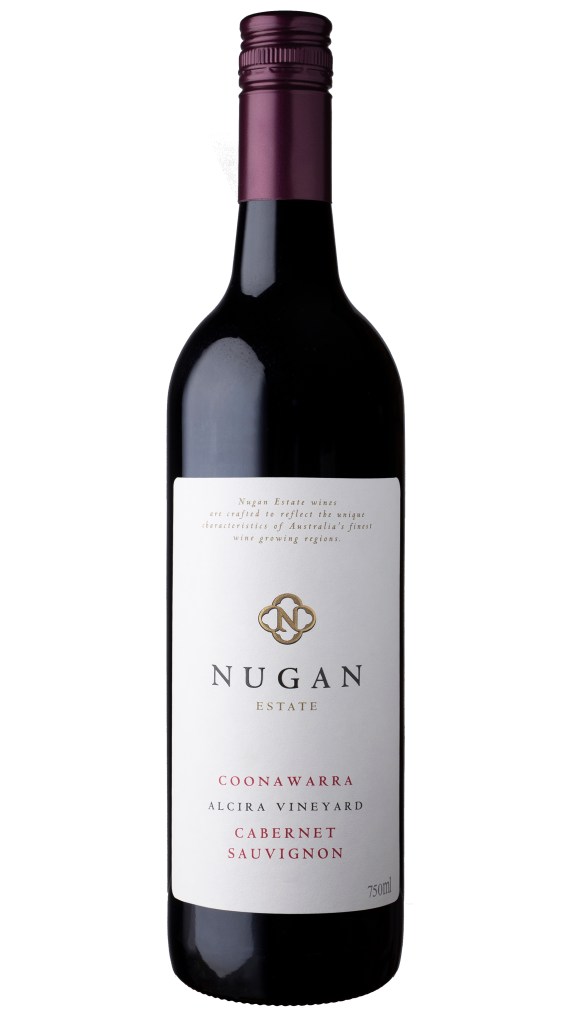
The Pinots showed good high acidity with soft tannins typical of this varietal with oak indicators of cola, soft red fruit on the nose and palate with medium alcohol. I enjoyed most of what I tasted though nothing stood out. I found a few interesting Cabernet Sauvignon wines from Coonawarra in South Australia. One of my favourites was a 2016 Nugan Estates Cabernet Sauvignon. This wine was a deep ruby bordering on a purple colour. It had medium-plus alcohol exhibiting blackberry, black plums, mulberry, black currant, leather, cloves, and vanilla. It is apparently vegan-friendly. Unfortunately, it is not available at the LCBO. Hopefully, they bring it in one day in Vintages.

Courtesy of nuganestate.com.au

I return to the Margret River booth and tried a 2017 Cabernet Merlot blend finding notes of cassis, blackberry, black plum and vanilla. Medium to medium-plus alcohol, medium-plus tannin with plenty of black fruit. I also tried a 2014 Cabernet Sauvignon which had notes of chocolate, black plum, cassis, leather with medium-plus tannins, medium acid with plenty of dark black fruit to match with the oak flavours. This wine was my favourite of the night.


Overall the event was enjoyable. I tried twenty-five wines during the afternoon and re-affirmed why I explore and purchase Australian wines.

Design a site like this with WordPress.com
Get started